Good Isn’t Enough: Why Businesses Need to Conduct Research Before Branding and Execution
Many businesses look good on the surface, but that doesn’t necessarily mean they’ll be chosen by the market. Without proper research, appearances are just skin-deep. Research helps businesses understand their customers, identify market needs, and translate the owner’s vision into a brand that is relevant, trusted, and chosen.

Good Isn’t Enough: Why You Need to Understand a Business Before Designing It
Many businesses today look appealing on the surface. Logos are designed to be more modern, websites are built to be more polished, social media feeds are curated to be more aesthetically pleasing, interiors are designed to be more visually comfortable, and packaging is crafted to feel more premium.
All of that is important. In an increasingly crowded market, appearance does help a business look more prepared, more professional, and more convincing.
However, a good appearance doesn’t always mean the business is understood by the market. A brand can look attractive, but that doesn’t necessarily mean it’s trusted. A website can look modern, but that doesn’t necessarily make people want to reach out. A business space may look aesthetically pleasing, but that doesn’t necessarily make customers feel comfortable, confident, or eager to return.
This is where many businesses begin to misinterpret the problem. They assume the issue lies with the appearance, when in fact the bigger problem often lies in understanding.
Before a business is designed, it must first be understood. Who are its customers? What do they need? What makes them hesitate? How do they compare their options? And what ultimately makes them trust the business?
Because in the end, the market doesn’t choose a business just because it looks good. The market chooses a business that feels relevant, clear, convincing, and capable of meeting their needs.
Visuals Are the Entry Point, Not the End Goal
Good visuals can certainly grab attention. They make people pause for a moment, look longer, and create an initial impression that a business is run seriously. In the context of branding, design, websites, or physical business spaces, first impressions still play a crucial role.
But attention isn’t a decision.
Once someone is interested, they’ll start asking themselves questions. Is this business right for me? Can I trust its products or services? How is it different from other options? Is the price reasonable? Is the process easy? Do they truly understand my needs?
If those questions go unanswered, a great visual design remains nothing more than an impression. People might like what they see, but they won’t take action. They look, but they don’t reach out. They’re interested, but they don’t buy. They remember the design, but they don’t find a strong enough reason to choose it.
This is the difference between design that just looks good and design that works.
Design that works doesn’t just grab attention. It helps people understand, compare, trust, and make decisions. To reach that stage, design can’t stand alone. It must stem from research, strategy, and a true understanding of the market.
Problems arise when businesses rely too heavily on assumptions
Many business decisions stem from assumptions that seem reasonable. The owner thinks a certain concept is appealing. The team believes the message is clear. The designer feels the visuals are strong. Competitors use a certain approach, so other businesses feel they need to follow suit.
The problem is, assumptions often seem correct because they come from the people closest to the business. They understand the product, know the behind-the-scenes processes, and have an emotional connection to the brand being built.
However, customers see things from a different perspective.
What the owner considers important isn’t necessarily seen as important by customers. What the team thinks is clear might still be confusing to newcomers. What the business perceives as premium might feel distant to the target market. What the designer finds beautiful doesn’t necessarily help potential customers make a decision.
This is where research becomes crucial. Research helps businesses distinguish between what we think is true and what’s actually happening in the market.
Research isn’t meant to eliminate intuition. On the contrary, research sharpens intuition. Research helps creative ideas move in the right direction, so that branding, design, websites, and marketing strategies aren’t just born from internal preferences, but also from an understanding of customers’ real needs.
Branding Is a Process of Translation, Not Just Aesthetics
Branding is often simplified to just logos, colors, fonts, and visual design. Yet, well-developed branding goes far deeper than that. Branding is how a business builds perception, fosters trust, and creates a reason to be chosen.
Logos, colors, typography, visual style, and communication tone are indeed important. But all these elements should be the result of a broader understanding, not a standalone starting point.
Before deciding what the brand should look like, a business needs to understand the position it wants to establish. Before choosing a communication style, a business needs to understand the language that resonates most with customers. Before creating a website or content, a business needs to know what potential customers are actually looking for, comparing, and seeking to confirm.
Strong branding doesn’t start with the question, “What should the design look like?” Strong branding starts with more fundamental questions: who do we want to reach, what problems do they face, what makes them trust us, and what makes this business a better choice than others.
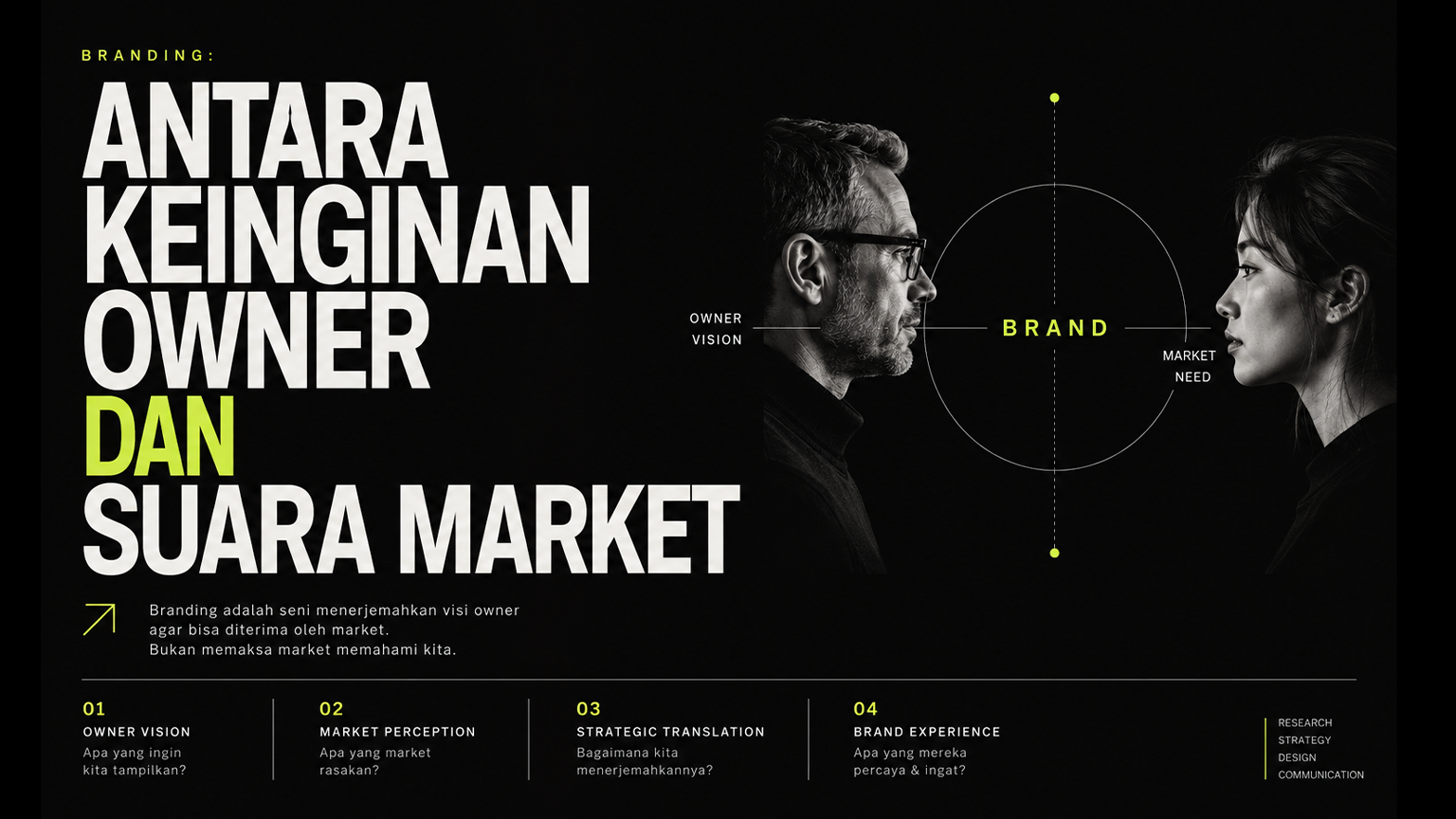
Every business owner typically has a vision. Some want their business to appear premium, modern, approachable, strong, unique, or to be a leader in its category. That vision is crucial, because without it, a business can easily lose its direction.
However, the owner’s vision needs to be translated into the language of the market. Customers don’t always understand the intent behind an idea. They only see what’s presented, read what’s communicated, experience what’s offered, and then decide whether the business is trustworthy.
That’s where branding comes in: it serves as a bridge between the owner’s aspirations and the voice of the market.
Branding isn’t about forcing the market to understand us. Branding is the art of translating a business’s values, vision, and strengths so they can be accepted, understood, and trusted by the market.
A Good Website Should Help People Make Decisions
Many businesses build websites to look professional. There’s nothing wrong with that. A website can indeed boost credibility, especially when potential customers want to find clearer information before contacting you or making a purchase.
However, a good website isn’t just about its appearance.
A website must help visitors understand the business quickly. It must explain the value it offers, provide evidence, address doubts, and guide people toward the next step.
Website visitors usually don’t read everything from start to finish. They scan. They look for cues. They want to quickly know if the business is relevant to their needs. Therefore, the website’s structure must be designed based on how people think and make decisions.
Headings must be clear. The main message must be strong. Services must be easy to understand. The portfolio must provide evidence. The page flow must be intuitive. Calls to action must be visible. Forms should not be cumbersome. Page load speed and mobile responsiveness must be prioritized.
Without research, a website often becomes a collection of information that the business deems important, but which may not necessarily be important to customers. Ultimately, the website looks comprehensive but is ineffective. Many elements are displayed, but not all of them help people build trust and make decisions.
Research helps determine what needs to be highlighted, what needs to be simplified, and what should be the primary focus of a business’s digital experience.
Space design must also account for customer behavior
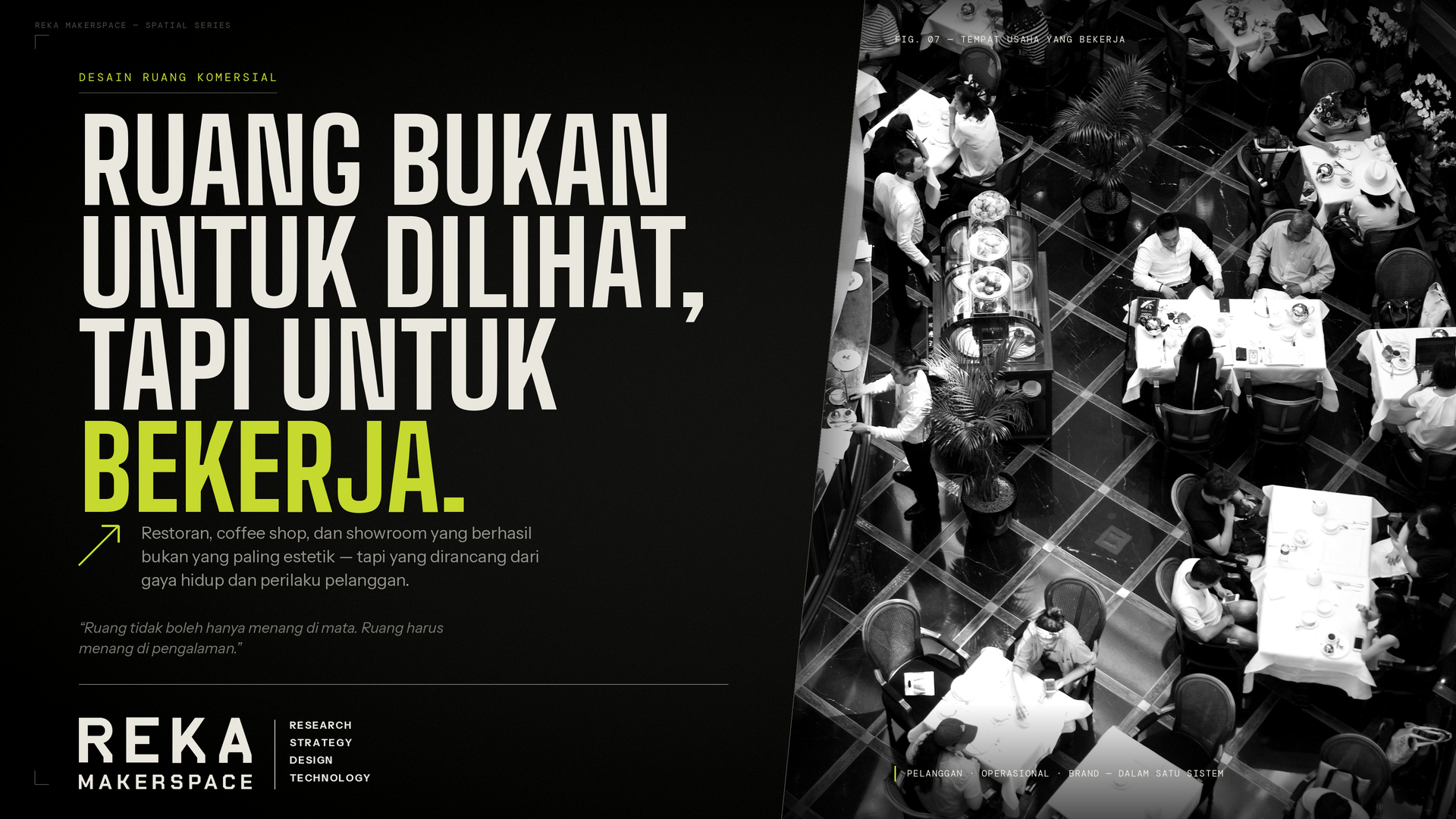
For brick-and-mortar businesses such as coffee shops, restaurants, showrooms, clinics, offices, retail stores, or service spaces, interior design plays a major role in shaping the customer experience. A space can make a brand feel more alive, more trustworthy, and more memorable.
However, space design isn’t just about aesthetics.
A well-designed space must understand human behavior: how customers enter, what they see first, where they stop, how they move, how transactions flow, and how the atmosphere of the space influences their decisions.
A space that looks good in photos isn’t necessarily good for business. A space that looks attractive isn’t necessarily comfortable to use. A space that looks premium isn’t necessarily operationally efficient. A visually busy space doesn’t necessarily help customers understand the products or services being offered.
Through research, space design can be directed not only to create a visual impression but also to shape the experience. It helps improve flow, enhance comfort, strengthen brand perception, and support business objectives more effectively.
Good design doesn’t just make a space look beautiful. Good design makes a space work.
Research Reduces the Risk of Going Off Course
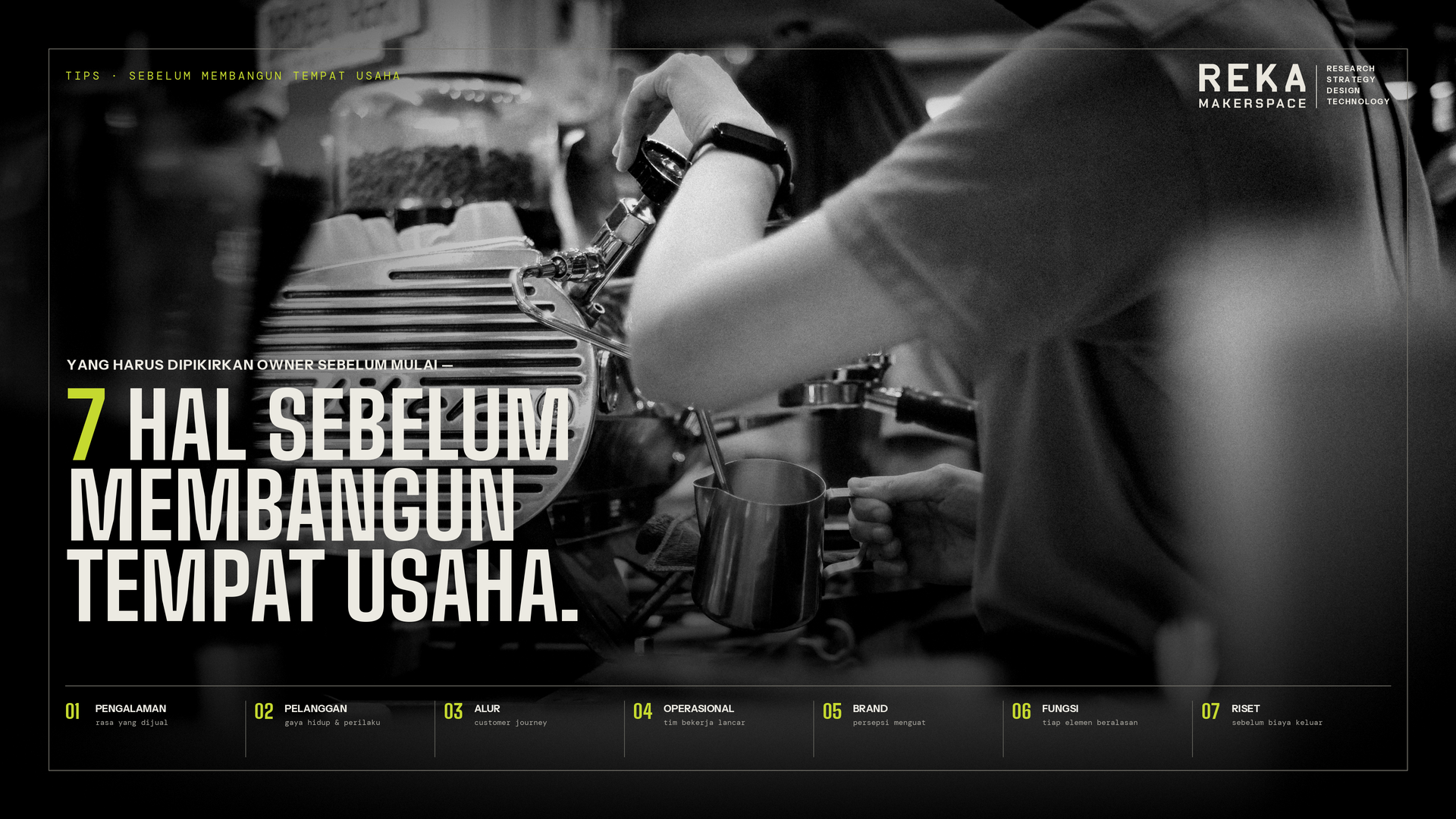
Some businesses view research as an extra step that slows down execution. Yet what’s more costly than research is a large-scale execution built on false assumptions.
Creating a new brand identity costs money. Building a website costs money. Designing a space costs money. Launching a campaign costs money. Opening a branch costs money. Changing strategy also costs money.
If all of this is done without sufficient understanding, the risk of going off track becomes greater.
A business might change its logo when the real problem lies in its positioning. A business might build a new website when the main issue is an unclear value proposition. A business might redesign its space when the problem lies in its operational workflow. A business might run ads when the message it’s conveying isn’t yet relevant to customer needs.
Research helps businesses identify priorities. What needs to be fixed first. What most influences customer decisions. What is merely cosmetic. What is truly strategic.
With research, businesses don’t just move fast. They move in the right direction.
The business that succeeds is the one that’s relevant
Today’s market offers too many choices. For a single need, customers can compare many brands in a short amount of time. They can check Instagram, visit websites, read reviews, compare prices, view portfolios, and seek out others’ experiences before making a decision.
In situations like this, simply being good isn’t enough.
A business needs to be relevant.
Relevant means customers feel that the business understands their needs. Relevant means the message addresses real problems. Relevant means the design helps clarify value. Relevant means the brand aligns with market expectations. Relevant means the experience provided makes it easier for people to trust the brand.
Relevance doesn’t come from appearance alone. Relevance comes from understanding.
That’s why research is a crucial foundation before a business moves on to branding, design, websites, physical spaces, and marketing execution. Without the right understanding, a business is merely putting on a show. With the right understanding, a business begins to build a reason to be chosen.
From Research to Strategy, From Strategy to Execution
Good research doesn’t stop at a report. Research must be translated into strategy. Strategy must be translated into design decisions. Design decisions must be translated into experiences that customers can feel.
This is where an integrated approach becomes essential.
Research helps identify problems and opportunities. Strategy helps determine direction. Branding helps shape perceptions. Design helps make a business’s value visible and tangible. Technology helps streamline processes. Execution helps bring all ideas to life.
When each stage is interconnected, a business doesn’t just look better. It becomes better positioned to be trusted, chosen, and to grow.
Because the ultimate goal isn’t just to make a business look good. The goal is to make the business clearer, more relevant, and more meaningful to the market it aims to reach.
Conclusion
Making a business look good is an important step, but it’s not the final one. A good appearance must be part of a larger strategy. A good strategy must stem from sound research. And sound research must be driven by a desire to understand the market, not merely to validate one’s own assumptions.
A strong business isn’t just one that looks attractive. A strong business is one that understands who its customers are, knows what they need, is able to clearly communicate its value, and provides an experience that builds customer trust.
A great look gets people to notice. Research helps people understand the business. Strategy helps people trust the business. Execution helps people choose the business.
REKA Makerspace helps businesses grow through research, strategy, branding, design, space, and technology. We help business owners translate their vision into strategies that are relevant to market needs.
It’s not just about making a business look good—it’s about making it clearer, more trustworthy, and a better choice.